Maret Puhk: “The mill is like a member of the family”
Maret Puhk’s grandfather, Eduard Puhk, founded a mill with his brothers on the Sörnäinen waterfront in Helsinki on 8 October 1934. The family had owned a mill in Estonia since the 17th century. Following in the footsteps of her father, Jüri, Maret has in turn been running the family business since 1997.
– We children grew up with the Mill, as did my own sons. Next up is the fifth generation, sums up Maret Puhk, Chair of the Board of Helsinki Mills.
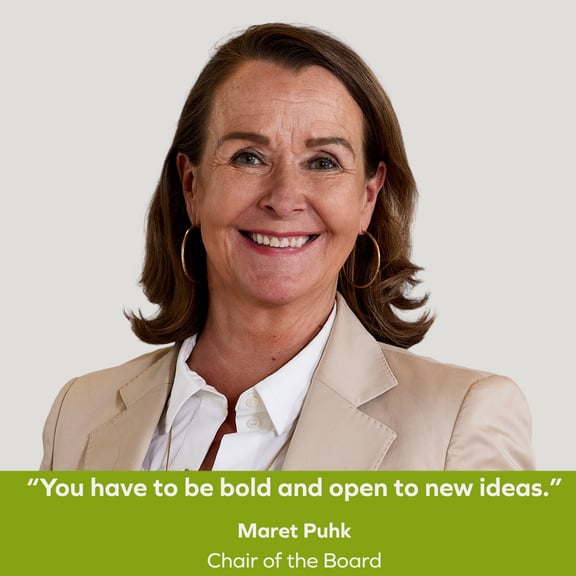
– I’m happy that we have people in our family who are carrying on the tradition. That is what running a family business is all about: passing it on to the next generations, says Maret Puhk.
Maret’s earliest memories of the mill are linked to Sörnäinen; specifically, to the illuminated figure of a miller on the wall of the building, which was a rarity at the time. And the ‘Take Your Children to Work’ Day, which was first held in the early 1960s in Helsinki Mills.
– I was of school age when every spring, before we moved to the summer pastures, my dad would take us to the mill for a day. My brothers Arno and Erik and I always looked forward to that day when we could slide down the spiral-shaped conveyor belt for flour sacks from the 7th floor of the mill down to ground level. We went round and round on that shiny wooden track, riding on top of an empty canvas sack. It wasn't scary at all: it was just exciting and great fun, recalls Maret.
"We used to discuss matters relating to Mill every day over dinner”
In family businesses, shareholders meet often, both informally and formally. When Maret was a child, her family almost always ate dinner together, even though her father worked a lot. As the sole heir, my father had taken over the running of the family business after completing his training as a miller.
– For as long as I can remember, my parents used to talk about the Mill every day. Later on, we children also joined in the discussions. We grew up with Mill, and the Mill grew up with us, sums up Maret.
My grandfather’s and father’s Estonian background were very significant in my family when I was a child. Both family life and the foundation of the Mills were shaped by what happened to the brothers and their relatives when Russia occupied Estonia.
These days, however, we’ve also made some fun memories.
– I remember what a big deal it was when Mum and Dad got to visit Tallinn for the first time and the whole Estonian family was there to meet them at the harbour.
During her school and university years, Maret worked summers at the Sörnäinen office.
– My dad and I would travel together from Ojakkala in the mornings and return to our summer home at the end of the working day, says Maret, recalling the start of her career.
When she was younger, Maret never dreamt of working in the family business. After all, as well as her father, both of her brothers were already working at the mill.
– I was interested in the law, so I went to study it with the aim of working as a lawyer.
However, my career as a lawyer came to an end when my brothers left the Mills and my father retired.
– I had always been involved in the board work of our family business. That had already sparked my interest. After my maternity leaves, I made my decision: I gave it a go and got really into it.
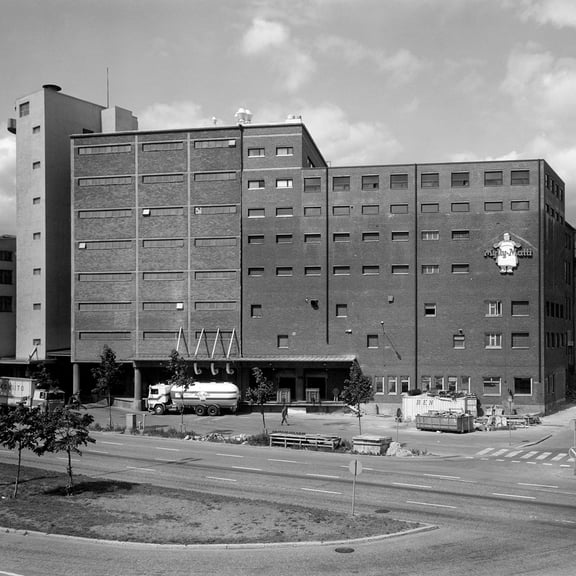
Almost 60 years of investment and construction on Sörnäisten rantatie. The 40-metre grain silo at Helsinki Mills is a fine example of white functionalism. It was completed in 1941, and visible alterations were made as late as the 1980s. Matti the Miller had been the emblem of Helsinki Mills since its foundation in 1934, when the company purchased the premises of the Strömberg electrical equipment factory. The illuminated advertisement appeared on the high street and on the wall of the mill building in 1962. The area is now classified by the Finnish Heritage Agency as a cultural-historical environment of national significance.
(Photo: Johnny Korkman (Helsinki City Museum)
“We are growth-oriented and open to new ideas”
In the 1990s, Helsinki Mills invested in a new flour mill in Järvenpää, expanded its operations into Estonia, and embarked on a series of acquisitions in Finland.
– A key factor in our growth was the fact that we built the most modern mill in the Nordic region in Järvenpää. We wouldn’t have been able to fit in Sörnäinen anymore. However, the old mill building has been restored and remains part of Helsinki’s streetscape. Perhaps the current students at the University of the Arts Helsinki are grateful to be able to study in such a wonderful place, Maret muses.
As her first order of business, in 1997, Maret moved to Vaasa to work as a lawyer.
– The acquisition of Polar Mills, a manufacturer of oat flakes, was a significant and major investment. We managed to get a feel for organic farming, even though there were challenges, says Maret three decades later, now that Helsinki Mills is Finland’s largest processor of organic cereal grains and gluten-free oats.
– That stage really sums up our family business. We are growth-oriented and open to new ideas. It must have taken courage, even if caution was also called for. Just as in 2014, when we invested in Oy Topfood Ab, based in Närpiö, so that we could start producing Finnish muesli and cereals.
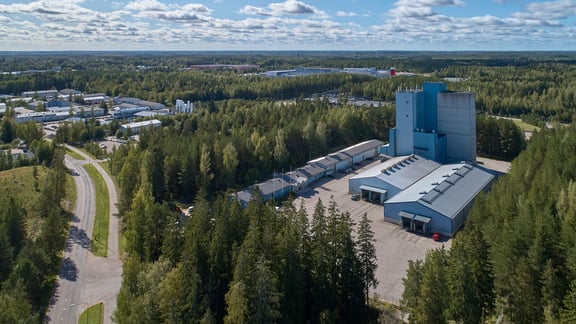
– The most significant factor enabling our growth was the fact that we built a new mill in Järvenpää in the early 1990s, says Maret Puhk.
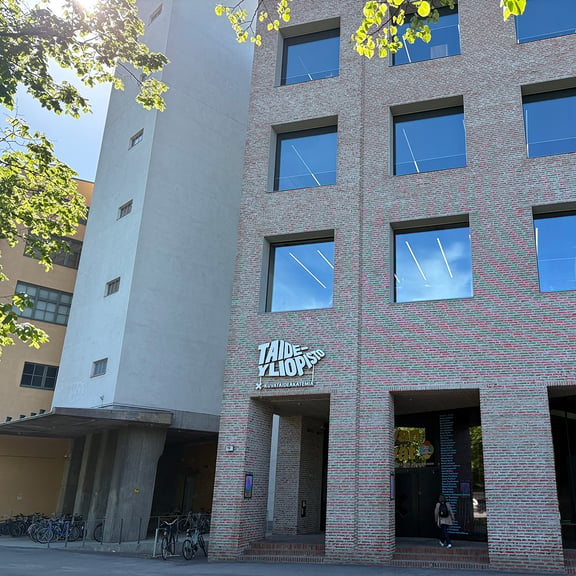
The University of the Arts Helsinki is now housed in the premises of the old mill in Sörnäinen.
Towards the end of the 20th century, the company realised that, in a small country like Finland, there were few consumers and the competition for them was fierce.
– We decided to focus on exports, even though it was expensive. We were setting up an export network and started to attract clients, says Maret, explaining why in 2025, exports already accounted for around 30 per cent of the Mills turnover.
Maret soon became familiar with the figures, products, and people.
– As the staff were in frequent contact with me over all sorts of matters, it was only natural that personnel matters fell within my remit. Just like all sorts of administrative matters, from the courtyard at the Järvenpää branch to the organisation of office cleaning.
– To grow and develop, a company must have top-class experts and professionals. We have always had a brilliant team and long-term employment relationships.
– We’ve been able to bring in good staff when we’ve needed them. And the staff have been recommending Mills as a place to work within their own networks, says Maret.
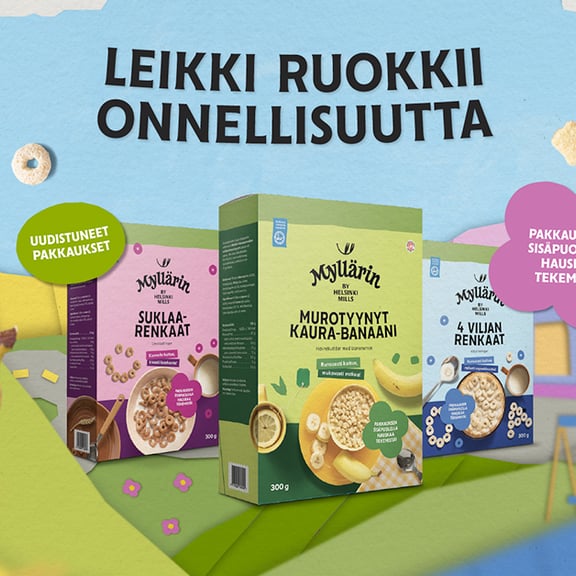
– We have been open to new ideas. The acquisition of Polar Mills in Vaasa (1997) gave us our first taste of the organic sector. By investing in Topfood in Närpiö (2014), we began manufacturing the domestic Myllärin cereals and muesli, says Maret Puhk.
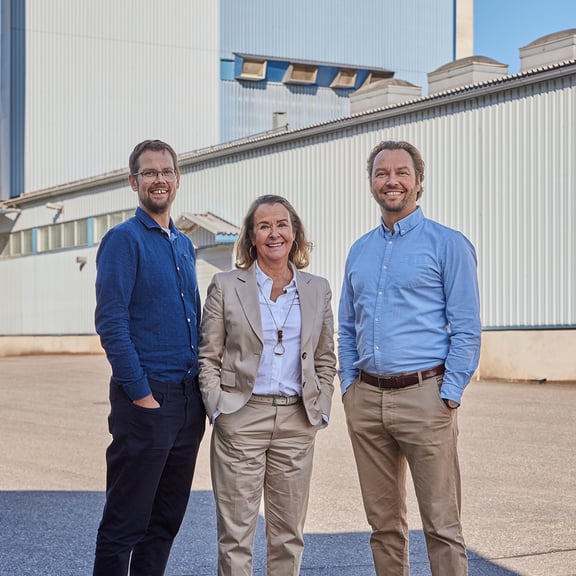
– Mills has always been part of our family’s everyday life. Mills has been given time and work has been put into it,’ sums up Maret Puhk. Pictured on the right is the eldest son, Niklas Kumlin, Managing Director of Helsinki Mills, and on the left is the middle son, export sales representative Filip Kumlin.
The dinner conversations continued with my own sons
Responsibility. Cooperation. Continuity. These values guide Helsinki Mills’ activities as it looks ahead to its centenary celebrations. The same values could have been recognised in the way Maret’s grandfather and father worked and made decisions.
– Mills has always been part of our family’s everyday life. Just as in her childhood family, Mills has been given time with her own sons and her husband, and a lot of effort has gone into making that happen. The company is like one of our family members, says Maret.
Maret says that the dinner-table conversations about Mills continued when her own sons were young.
– I said on several occasions that Mills cannot continue without the family’s involvement. I’m really happy that my comments were taken seriously and that we have people to carry on the work.
The trio of wild little boys were already getting to grips with the Järvenpää mill whilst it was still under construction. The trio, who were spotted from the mill’s high, unfenced roof, must certainly have given their mother a fright, but Maret also sees a symbolic meaning in the situation.
– Ever since I was little, things have been on an upward trajectory.
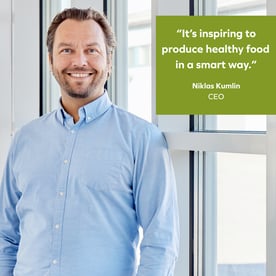
The boys’ careers began with summer jobs at the Mills. Niklas Kumlin, the eldest son, who started out as a seamster and packer of flour sacks, did not, akin to his mother, plan a career in the family business. In 2010, however, the Mills came out on top. After working in quality control, marketing and exports, Niklas took on the role of CEO in 2017.
The middle one, Filip Kumlin, has, like his older brother, come to know the Mills through various roles. Export work has kept Filip, who has a knack for languages, busy for the last 10 years. The youngest son, Kristian Kumlin, has been involved in developing Mills’ first sustainability claims. He is currently employed by the Ministry for Foreign Affairs of Finland.
– The Mills is familiar already to the fifth generation. The eldest of the five grandchildren has completed an Introduction to working life (TET) internship at the Mills. Next up is the summer job season. That’s what running a family business is all about: passing it on to the next generations.
Taste memories: from Matti’s crispbread to Grandma’s rolls
When Maret was a child, there was a crispbread factory in Sörnäinen, as well as an oat mill.
– For us children, crispbread was a much more tangible thing than flour and flakes. During my first few years at school, Matti’s crispbread was even served in the school canteen, says Maret.
In the 2020s, Maret bakes up memories at the summer cottage using Myllärin Organic Multigain Bun Flour when the family is together.
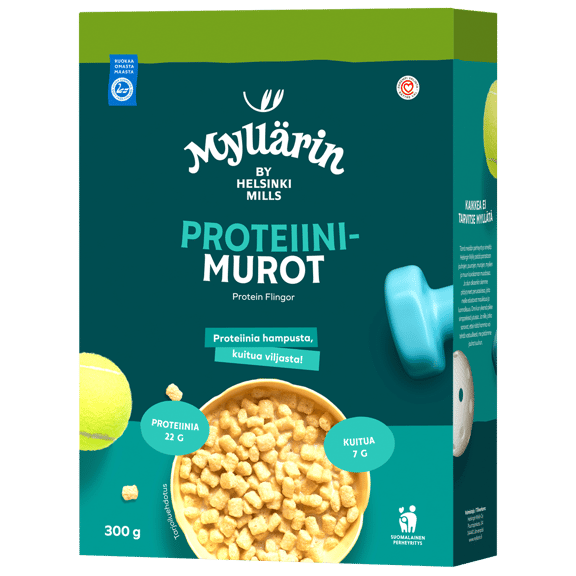
– Everyone in the family loves those rolls. I also like porridge. I’m now really excited about Myllärin’s new product, Protein Cereal. It’s a lovely, easy breakfast to kick off a busy day.
As well as protein, Maret pays attention to fibre and sugar content. Heart Symbol products and plant-based food are to Maret and her husband’s liking.
– When it comes to buying food, buying domestic products is an absolute must for me.
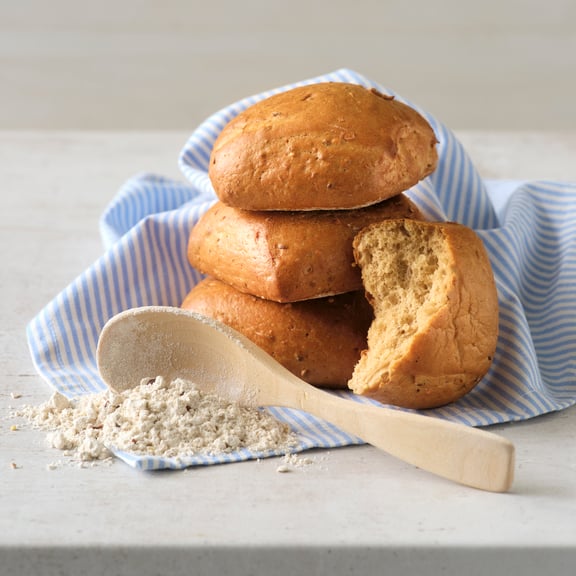
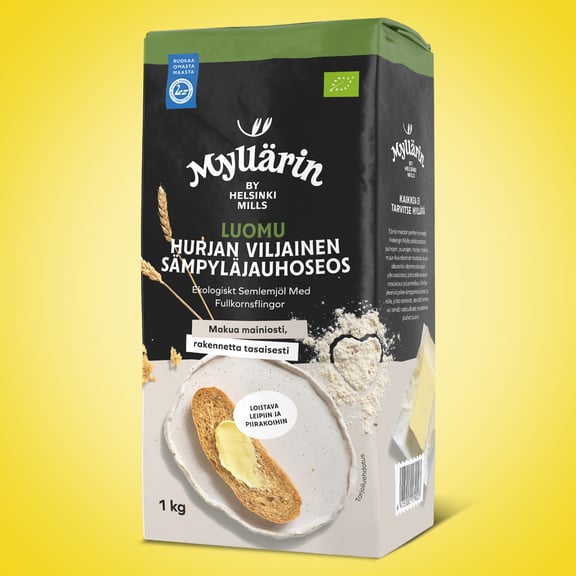
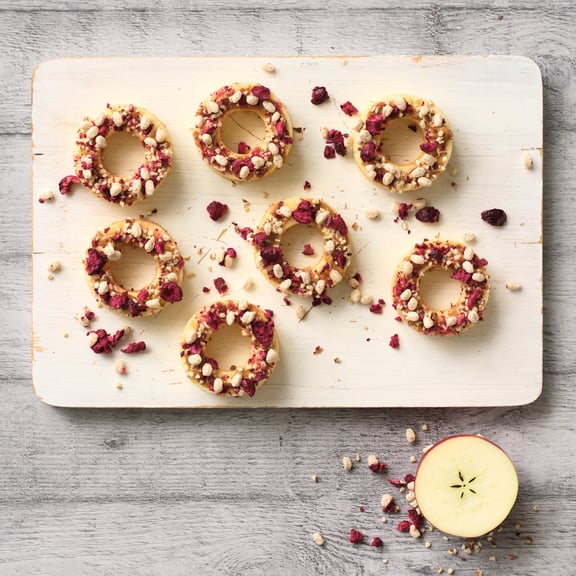
Maret’s go-to product is Myllärin’s Organic Multigrain Bun Flour, which she uses at her summer cottage to bake the bread rolls that the whole family loves.
– Now I’m also excited about Myllärin’s new product, Protein Cereals.
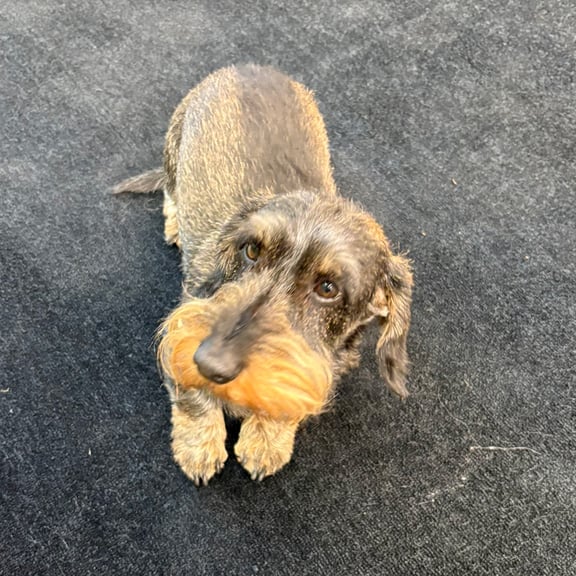
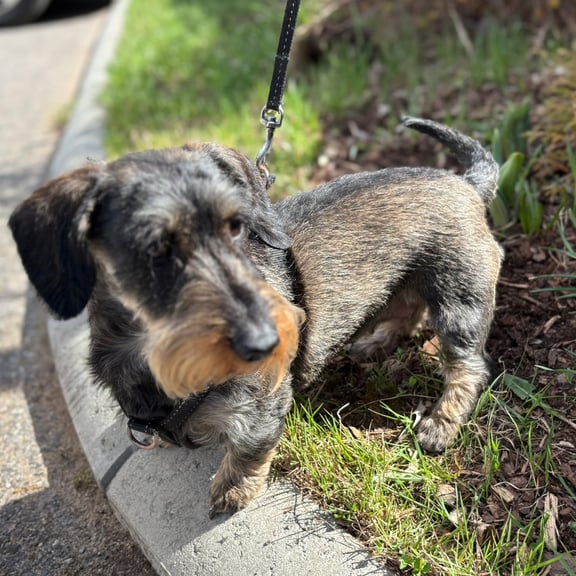
– I’ve been an active rider since I was a child, and we’ve always had dogs, says Maret Puhk. Ada, a 7-year-old wire-haired miniature dachshund, also brings joy to the staff at the Järvenpää office from time to time.
The Chair of the Board and Head of HR continues to work full-time at the family business, although she does try to lighten her daily workload and set aside time for things that bring her happiness.
– I love spending time at the cottage and looking after the garden. Exercise is important to me. I’ve loved animals and children ever since I was little. I've been an active rider since I was a child, and we've always had dogs, says Maret, who is currently looking after Ada, a 7-year-old wire-haired miniature dachshund.
The start of her career as a dog lover required the 9-year-old Maret to be prepared to put herself on the line for a cause she felt was important. An attitude that has certainly been helpful in the family business as well.
– When I started seriously pushing for a dog, my parents wouldn’t agree to it for quite some time. It wasn't enough just to whine about it; I had to put in the work as well. I had to go to my neighbour’s cottage to pick up that Sunday’s Helsingin Sanomat, which I could then use to see if there were any puppies available. After several summers of trips to pick up newspapers, my efforts paid off: we got our first dog. A dachshund called Tiina, says Maret.
A journey into history: When the Puhk brothers set up a mill in Helsinki
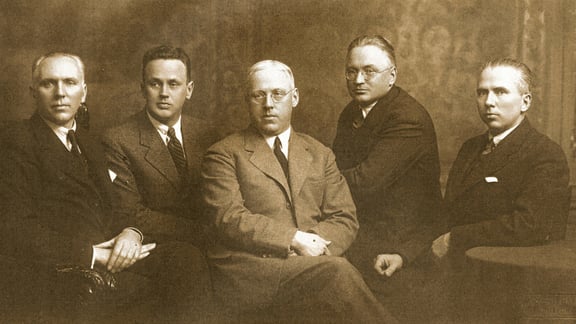
In the 1930s, Finland relied largely on imported wheat. The Puhk brothers from Estonia decided to capitalise on the market situation and open another mill in Helsinki. A suitable spot was found on the Sörnäinen waterfront.
When it was completed, the mill was the city’s first and only large mill. The daily milling volume ran into tens of thousands of kilograms.
Delve into history and read about how the Puhk brothers founded a mill in Helsinki